
Alignment as Discipline
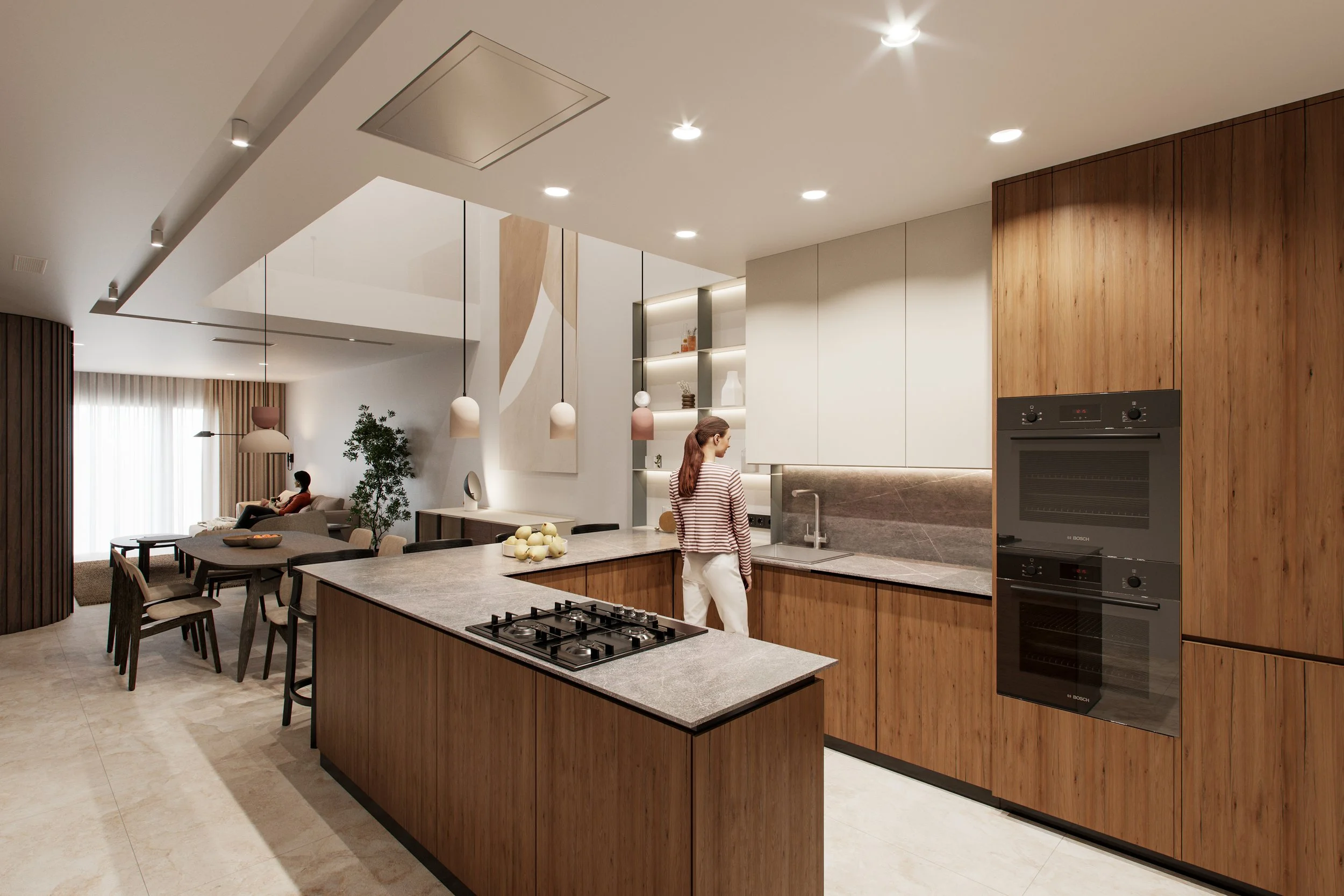
Why Architecture Must Lead Interior Design
In many projects, architecture and interior design are treated as sequential phases. Planning is resolved first. Interior strategy follows later. Structure is established. Atmosphere is layered afterwards.
This sequence appears efficient. In practice, it often generates friction.
When architectural decisions are concluded before interior strategy is considered, the spatial framework is already fixed. Structural grids, ceiling heights, façade openings and service routes have been determined. Interior interventions must then negotiate predetermined constraints, frequently introducing compromise.
These compromises are rarely conceptual. They are technical.
Ceilings are lowered to conceal services that were not anticipated. Joinery conflicts with beam depths. Lighting is retrofitted rather than integrated. Acoustic treatments are applied reactively. Circulation is adjusted to accommodate late-stage compliance requirements.
The cost of separation emerges during coordination.
Within Malta’s built environment, this issue is amplified. Urban Conservation Areas impose contextual limits. Deep-plan typologies restrict façade permeability. Overlying third-party structures affect structural flexibility. Change-of-use applications introduce sanitary, accessibility and fire safety considerations that influence zoning and circulation.
When interior planning is delayed, these parameters collide.
An integrated approach addresses them concurrently.
Spatial sequencing is tested against structural rhythm from the outset. Service routes are considered before interior finishes are defined. Natural light penetration informs programme distribution. Mechanical and acoustic requirements are anticipated within volume, not concealed beneath it.
This coordination reduces corrective intervention.
Consider circulation in a hospitality environment. Public movement, staff routes, fire escape distances and sanitary separation must operate simultaneously. If resolved independently, the resulting plan may satisfy regulation yet feel disjointed. When resolved together, clarity emerges naturally.
Consider residential planning. A living area’s quality is determined not only by floor area but by proportion, ceiling height, structural spacing and light orientation. Interior resolution that responds to these parameters early produces coherence. Postponed interior strategy often results in adjustments that weaken spatial clarity.
The distinction lies in timing.
Alignment is therefore procedural rather than aesthetic. It is established through early-stage collaboration between architectural, structural and environmental disciplines. It requires disciplined sequencing of decisions. It demands transparency about constraint before material selection begins.
This methodology also affects commercial performance.
Specifications selected without regard for envelope performance, environmental exposure or maintenance cycles may satisfy short-term visual ambition but compromise longevity. When structural logic, material durability and climatic context are considered together, investment aligns with lifespan.
Coordination is preventative.
It reduces abortive work. It limits late variations. It clarifies budget allocation earlier in the process. It allows consultants to contribute meaningfully before parameters are fixed. It safeguards spatial intent from erosion during construction.
Importantly, this does not constrain design exploration. On the contrary, clarity of framework enables more precise creativity. When structural spans, service routes and regulatory limits are understood from the outset, design decisions operate within defined parameters rather than reacting to unforeseen restrictions.
Within such a framework, constraint becomes constructive.
Architecture must therefore lead interior design not as a hierarchy of disciplines, but as a structural foundation. The architectural concept establishes proportion, order and environmental logic. Interior strategy refines material, atmosphere and occupation in direct response to that order.
When both evolve together, spatial experience feels resolved.
Where separation introduces correction, integration preserves intention.
Alignment, in this sense, is less about visual coherence and more about disciplined coordination. It is the mechanism through which spatial clarity survives the complexity of regulation, engineering and construction.
In an environment defined by layered constraints, such discipline is not optional. It is essential.